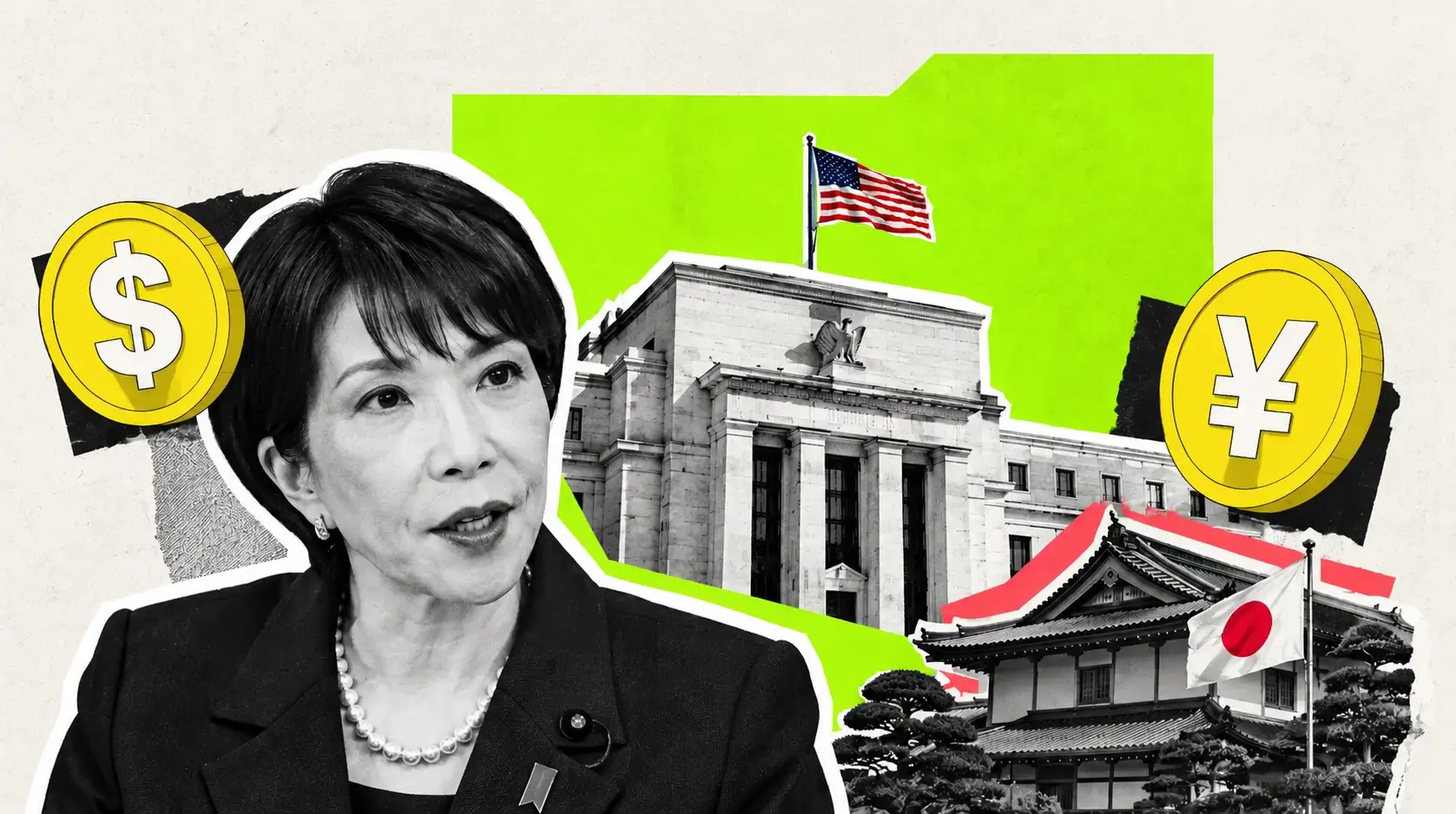



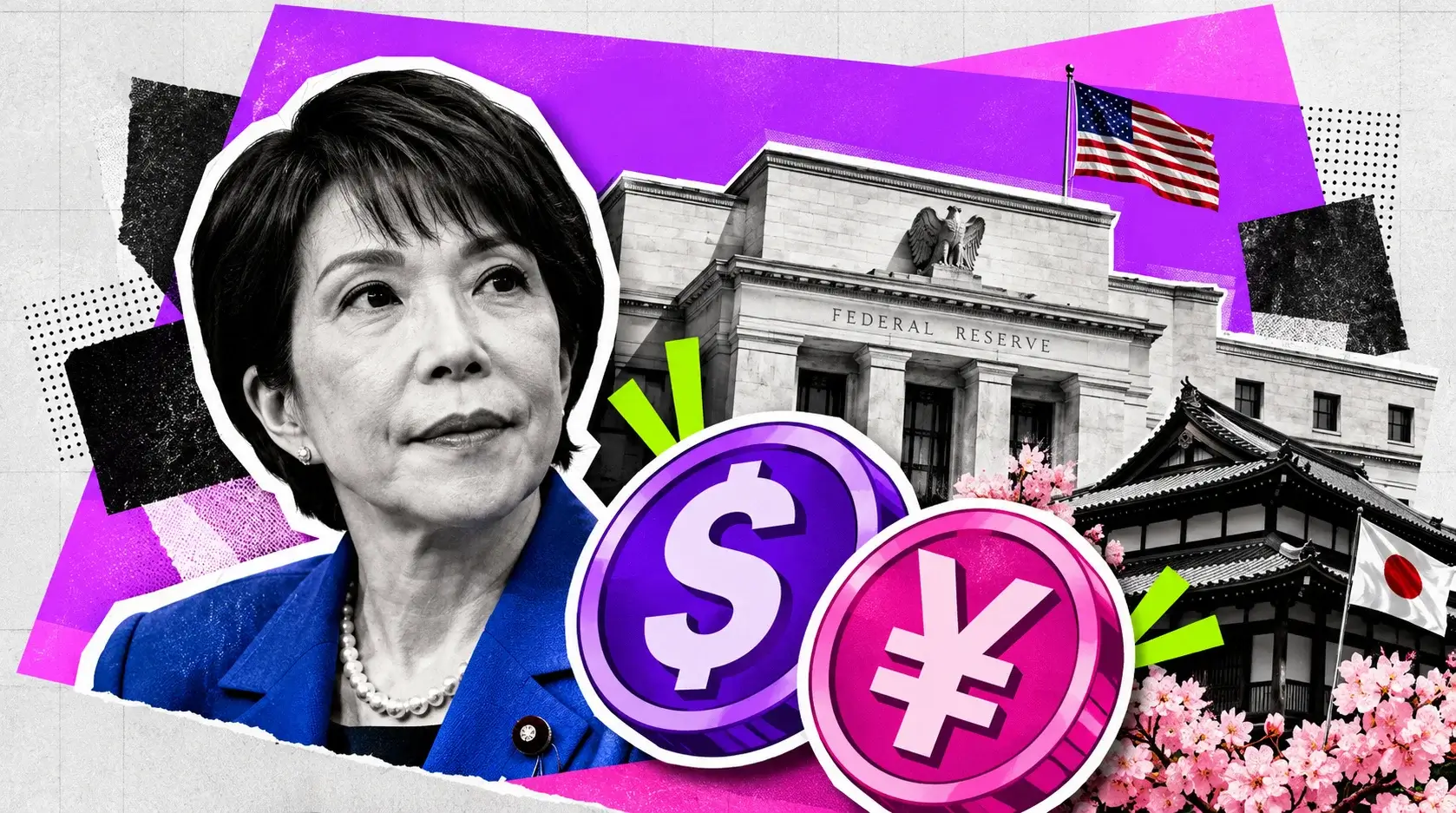
Yen Firms to 158.08 as Katayama’s Warning and Ueda’s 2% Inflation Signal Cap Dollar Below 160
A 250 to 275 bps Fed-BoJ rate gap keeps the carry trade alive | That's TradingNEWS
Key Points
- USD/JPY fell 0.26% to 158.08, inside an October range of 156.95 to 158.95.
- Japan spent a record ¥15.4 trillion defending the yen from July 30 to August 26 with U.S. support.
- The BoJ holds rates at 1.25% against the Fed’s 3.75%–4.00%, a 250 to 275 bps gap.
USD/JPY traded at 158.08 in New York on Tuesday, down 0.418 yen, or 0.26%, from Monday’s close near 158.50. The pair dipped as low as 157.995 during the session as the yen gained in Asian trading, where Japanese authorities signaled they were closely monitoring currency moves. The yen held its gain through a volatile day for the dollar, even as Brent crude spiked to $111.75 before falling to $106.85. Over the past month, the yen has weakened 0.41% against the dollar. Over the past year, it has weakened 3.99%.
The thesis for this forecast is direct. USD/JPY is pinned in a narrow range because two powerful forces cancel each other out. On one side, a rate gap of 250 to 275 basis points between the Federal Reserve’s 3.75% to 4.00% range and the Bank of Japan’s 1.25% policy rate keeps the carry trade profitable and pushes the yen weaker. On the other side, Tokyo and Washington have shown they will buy yen in size when the pair approaches 160 to 164, having spent record sums this year to defend that zone. The result is a pair that drifts higher on carry and gets knocked back on official warnings. Risk is skewed toward a lower USD/JPY, because the upside is capped by intervention while the downside opens if the BoJ signals faster tightening.
The October range shows the trap. USD/JPY has traded between a low of 156.95 on October 2 and a high of 158.95 through mid-October. That 200-pip range is narrow for a pair that swung from 163.98 to 152.28 earlier this year. The 2026 high of 163.98 came in July, just before a coordinated U.S.-Japan intervention. The 2026 low of 152.28 came after it.
Tuesday’s move came on official signals. The yen strengthened past 158 per dollar last Thursday, reaching a one-week high after Finance Minister Satsuki Katayama warned that authorities were prepared to intervene again if necessary. She stressed that Washington and Tokyo’s position had not changed since their joint intervention in July. On Tuesday, the yen gained again in Asia as authorities said they were watching moves closely.
The calendar sets the timing. The Fed decides on October 28. The BoJ concludes its two-day meeting on October 30 and releases fresh quarterly growth and inflation forecasts. Those two decisions, 48 hours apart, will decide whether USD/JPY breaks out of its October range.
A 275 Basis Point Rate Gap Keeps the Carry Trade Alive
The interest rate gap is the main force pushing the yen weaker. The BoJ’s policy rate stands at 1.25% after a hike in September that followed an increase in June. The Fed’s target range sits at 3.75% to 4.00%. That leaves a gap of 250 to 275 basis points in favor of the dollar. At the long end, the U.S. 10-year Treasury yield traded at 5.10% on Tuesday, near the 5.31% peak of October 5, its highest in 24 years.
The carry trade turns that gap into steady yen selling. Investors borrow in yen at low rates and invest in dollar assets at higher rates, pocketing the difference. As long as the cost of money in Japan stays below the return available overseas, carry trades will reassert themselves after every intervention. A gap of 250 basis points is large enough that leveraged positions pay well even after an October BoJ hike.
The gap has been narrowing, which matters for the trend. Japanese officials have pointed out that the gap between Japanese and U.S. policy rates has been narrowing over time as the BoJ raised rates from 0.75% at the start of 2026 to 1.25% now. But the Fed has also been hiking. The Fed raised rates in September for the first time in three years, and fed funds futures price an 89% chance of another hike in December. If both central banks hike once more, the gap stays near 250 basis points.
U.S. inflation keeps the Fed tightening. September consumer prices rose 3.7%, above the 3.6% forecast. Producer prices jumped 6.3%. Those numbers raise the odds that the Fed holds its hawkish course, which keeps the dollar’s yield advantage intact.
The gap also explains why intervention has limited lasting effect. Intervention changes the quantity of yen available in the market, but it does not change the incentive to borrow or sell yen. After every round of official buying, the carry trade resumes because the underlying return differential has not moved. That is why the yen erased about half of its gains from the July intervention within two weeks.
For the forecast, the rate gap sets the baseline drift higher in USD/JPY. Without official resistance, the pair would likely trade above 160. The gap would need to narrow by 50 to 100 basis points before the carry trade loses its appeal, which would require either multiple BoJ hikes or a Fed pivot.
Tokyo Spent ¥15.4 Trillion Defending the Yen This Summer
The other side of the trade is Japan’s willingness to spend. Japan spent a record ¥15.4 trillion, about $98 billion, to support the yen between July 30 and August 26, according to its finance ministry. That followed a separate record ¥11.73 trillion deployed across April and May. In total, Japan has spent more than ¥27 trillion defending its currency in 2026.
The July operation was historic. For the first time since 1998, the United States joined Japan in a coordinated yen-buying operation. U.S. authorities, overseen by Treasury Secretary Scott Bessent, bought yen using their foreign currency holdings. The United States used euros rather than dollars to buy yen, which surprised markets. The motive appears to have been to avoid any need for Japan to sell U.S. Treasuries, as Japan is the world’s largest foreign holder of U.S. government debt.
The intervention worked at first. USD/JPY had crossed 163, its weakest level for the yen in four decades. After the coordinated operation, the pair fell to around 155, a yen gain of about 5%. Japan’s apparent line in the sand at 160 was defended.
The gains faded. Within two weeks, the yen had erased about half of the intervention’s effect, trading back above 159. By October it settled into the 157 to 159 range. Intervention scared markets but did not stop money from flowing to the higher-yielding currency.
The financing structure has changed. After the July operation, Japan’s finance minister said future dollar-selling intervention would be financed through the Fed’s Foreign and International Monetary Authorities repurchase facility, to avoid selling U.S. Treasuries outright. That arrangement gives Japan more firepower without disrupting the Treasury market, which makes future intervention more credible.
The scale matters for the forecast. A government that has already spent ¥27 trillion in a single year has shown it will act. Each intervention resets market psychology and makes traders cautious about pushing the pair toward the same levels. That caution caps USD/JPY below 160 even when the carry trade would otherwise lift it.
The intervention zone is well defined. The July operation was deployed near 162 to 164, and the April to May operation came at similar levels. Traders have learned that 160 is the warning line and 162 to 164 is where Tokyo acts.
Katayama, Mimura and Bessent Have Sent a “Very Clear” Message
The verbal warnings have been relentless. Japan’s top currency diplomat, Atsushi Mimura, said on September 28 that markets should take at face value the very clear message Tokyo and Washington had delivered on the yen, signaling his resolve to act against excessive falls. The yen spiked on his remarks, breaking through 157 to trade around 156.75. Asked whether Japan stood ready to intervene again, Mimura said he had nothing to comment on how authorities could act.
The message came from the top. Finance Minister Katayama said U.S. President Donald Trump raised concerns about yen weakness at a summit with Prime Minister Sanae Takaichi, an unusually detailed account of the leaders’ talks on currencies. Katayama and Bessent also reaffirmed in phone talks that the yen’s undervaluation was a concern.
Mimura has kept the pressure on. In early September, he said authorities were neither satisfied nor reassured by the yen’s moves and remained on a state of heightened alert. He declined to comment on whether authorities had conducted a rate check, the step officials usually take before intervening. That ambiguity is deliberate: it keeps traders guessing.
Katayama added her own warning last week. She said authorities were prepared to intervene again if necessary and that Washington and Tokyo’s position had not changed. The yen strengthened past 158 on her comments, reaching a one-week high.
Bessent’s position matters as much as Tokyo’s. He has said he believes the Japanese government and the BoJ would take action that leads to a stronger yen. He has also noted that a weakening yen could drag down other Asian currencies. Some read his call for Japan to sit back and enjoy the success of Abenomics as criticism of Takaichi’s large spending plans. U.S. participation means Washington views the yen’s weakness as a broader financial stability issue.
The verbal campaign has worked within limits. Each warning has pushed USD/JPY back by 50 to 150 pips. None has reversed the trend driven by the rate gap. The warnings keep the pair below 160, but they do not push it far below 157 on their own.
The credibility of the warnings rests on past action. Tokyo has intervened twice this year, once with Washington. Traders who test 160 do so knowing that the last two tests ended with the yen several yen stronger in days.
Bank of Japan at 1.25% and Ueda Says Inflation Is “Quite Close” to 2%
The BoJ is the variable that could break the range. Governor Kazuo Ueda said on October 19 that underlying inflation is quite close to the central bank’s 2% target, with strong global AI demand adding to inflationary pressure from a tight job market. His remarks signaled scope for further rate increases.
Ueda has been explicit about the direction. In a speech on October 6, he said the bank intends to continue raising its policy rate and adjusting the degree of monetary accommodation in response to developments in economic activity, prices and financial conditions. After the September hike, he said the BoJ had entered a new phase, shifting its focus from coaxing underlying inflation higher toward 2% to preventing it from overshooting.
The pace of hikes has accelerated. The BoJ raised its policy rate in June and again in September, three months apart. That marked a shift from the previous pace of hiking roughly once every six months. The rate has risen from 0.75% at the end of 2025 to 1.25%, the highest since the 1990s.
Board members have pushed for speed. Board member Hajime Takata said the BoJ should hike nimbly in response to rising inflation and suggested faster or bigger moves were possible. Board member Junko Koeda cautioned against excessive restraint in raising rates.
The October meeting is still likely to bring a hold. Having just raised rates in September, many in the BoJ are cautious about delivering another hike this month and prefer to gauge how past increases have affected financial conditions. The basic pace appears to be once every three months, which would point to December for the next move. Back-to-back hikes remain possible but are not the base case.
The Outlook Report is the key. The BoJ releases fresh quarterly growth and inflation forecasts at its October 30 meeting. If those forecasts show inflation running above 2% for longer, the bank would be signaling a December hike. That signal alone could strengthen the yen.
Ueda also addressed the bond market. He said the bank’s bond taper plan is unchanged and declined to pre-set conditions for acting in the government bond market, citing rapid yield rises or disrupted market functioning as possible triggers. He argued that appropriate rate hikes help stabilize Japanese government bonds, because falling behind on rates would push long-term yields higher. That framing presents further hikes as consistent with market stability.
JGB Yields, Takaichi’s Spending and the Fiscal Question
The Japanese government bond market adds a second layer to the yen story. JGB yields have risen on prospects of further BoJ rate hikes and on concerns that Prime Minister Sanae Takaichi’s large spending plans could worsen Japan’s already strained finances. The 10-year JGB yield moved above 2% after the December 2025 hike, reached a record 2.38% in April as oil prices surged, and climbed to around 2.77% in July.
Rising JGB yields have two effects on the yen. Higher Japanese yields reduce the rate gap with the United States, which should support the yen. They also give Japanese investors more reason to keep money at home instead of buying foreign bonds, which reduces yen selling. Both effects work in the yen’s favor over time.
Fiscal fears can work the other way. If investors see rising JGB yields as a sign of fiscal stress rather than of higher policy rates, they may sell Japanese assets, including the yen. That is the risk tied to Takaichi’s spending agenda. Some read Bessent’s comments about Abenomics as a criticism of those plans, and analysts have argued that the yen will not recover sustainably unless Tokyo dials back its fiscal ambitions.
The equity market sends a different signal. Japanese stocks have risen 19% in 2026, outperforming global equities, which are up 13%. A weak yen supports Japanese exporters’ earnings in yen terms, which has lifted the stock market. The yen gained in August after Takaichi’s election win on bets of more fiscally responsible policies, alongside a rally in Japanese equities.
The bond market also explains Ueda’s comments on JGBs. By saying appropriate hikes help stabilize government bonds, he is arguing that the BoJ can tighten without triggering a disorderly selloff in JGBs. If he is right, higher policy rates would strengthen the yen without causing fiscal stress. If he is wrong, a rapid rise in yields could force the BoJ to intervene in the bond market, which would weaken the yen.
For USD/JPY, the JGB market is a slower-moving factor than intervention or the BoJ decision. A steady rise in Japanese yields, without signs of fiscal panic, narrows the spread with Treasuries and supports a gradual yen recovery. A disorderly spike would add volatility in both directions.
The Fed on October 28 Sets the Dollar Side
The Fed decision arrives two days before the BoJ and will set the tone for the dollar. Fed funds futures price an 82% chance of a hold at the October 27 and 28 meeting and an 89% chance of a December hike. October hike odds collapsed from 44% on October 14 to between 15% and 17% after Fed Chair Kevin Warsh declined to signal the next decision.
That repricing explains part of the yen’s recent firmness. As October hike odds fell, the dollar eased from its one-year high and the yen recovered from six-week lows. The Dollar Index tested 101.76 on Tuesday, down from 101.93 at the end of last week.
A hold with balanced guidance is the base case. If Warsh signals that December remains likely, the dollar would hold its yield advantage and USD/JPY would stay near 158. If he signals that December is not locked in, the dollar would weaken across the board and USD/JPY would test 157.
A surprise October hike would push USD/JPY toward 160. That outcome, priced at about 17%, would widen the rate gap and revive the carry trade. It would also put the pair back in the zone where Tokyo has shown it will act, which would limit how far the move could go.
U.S. data was weak on Tuesday. Housing starts fell 5.2% to 1.221 million in September, the second-lowest since May 2020. Pending home sales dropped to a record-low index reading of 66.0. Weak data tends to pull Treasury yields lower, which narrows the gap with Japanese yields and supports the yen.
The equity market helped the yen indirectly. The Dow gained 714 points and the S&P 500 rose 0.7% on Tuesday. Risk-on markets usually weaken the yen as a funding currency, but Tuesday’s rally coincided with falling oil and easing yields, which offset that effect.
The combination of the Fed on October 28 and the BoJ on October 30 creates a two-day window of high volatility. A dovish Fed followed by a hawkish BoJ would be the strongest scenario for the yen. A hawkish Fed followed by a dovish BoJ would push USD/JPY toward the intervention zone.
Oil at $111 Hurts the Yen Through Japan’s Import Bill
Oil is a direct negative for the yen. Japan imports nearly all of its energy, so higher oil prices widen its trade deficit and increase the flow of yen being sold to buy dollars for crude. The yen remained under pressure from rising oil prices last week as escalating hostilities between Saudi Arabia and Iran-backed Houthi forces raised concerns about Middle East supply.
Tuesday showed the link clearly. Brent spiked to $111.75, its highest since May 20, after the Houthis claimed strikes on Saudi Arabia’s Yanbu export facility and Shaybah oilfield. The dollar firmed against several currencies during the spike. When Brent reversed to $106.85, the dollar softened and the yen held its gains.
Energy also feeds into Japanese inflation. Ueda pointed to supply-driven price pressures from Middle East energy costs as one of two forces pushing inflation higher, alongside demand-driven inflation from AI. Higher energy costs raise Japanese inflation, which gives the BoJ more reason to hike. That creates a tension: oil weakens the yen through the trade balance but strengthens it through BoJ policy expectations.
The war on Iran, which began on February 28, has kept oil above $100 for most of October. The Strait of Hormuz carries about a fifth of the world’s crude and liquefied natural gas in normal times. Japan relies heavily on Middle Eastern crude and on LNG for power generation. Every disruption raises Japan’s import costs directly.
The geopolitical risk also cuts the other way at times. In a sharp risk-off move, the yen has historically gained as a safe haven, because Japanese investors repatriate funds and carry trades unwind. That safe-haven behavior has weakened in recent years as the rate gap grew, but it can still appear in a sudden market shock.
For the forecast, oil is a modest headwind for the yen. A de-escalation that drops Brent below $100 would ease Japan’s import bill and support the yen. A confirmed supply disruption that pushes Brent above $115 would widen Japan’s trade deficit and lift USD/JPY, though any approach to 160 would bring the intervention risk back into play.
Read More
-
Yen Stalls at 160 Despite a 3% JGB and Tokyo Core CPI at 2.0% — Intervention Sits at 164, Friday's Payrolls Decide
02.09.2026 · TradingNEWS ArchiveEnergy
-
BBUL Fund Surges 14% as QNX’s Record Quarter Lifts BB, but Volatility Decay Limits the Hold
20.10.2026 · TradingNEWS ArchiveStocks
-
XRPI and XRPR Bounce With XRP, but $10.25M in October Inflows and a 1B Token Unlock Cap the Upside
20.10.2026 · TradingNEWS ArchiveCrypto
-
November NG Slips to $2.975 as Mild Weather Masks 45 Bcf Storage Surplus and First-Ever 20 Bcf/d LNG Demand
20.10.2026 · TradingNEWS ArchiveCommodities
-
Pound Hits 1.3359 as 102,000 Job Gain and 3.7% Pay Growth Push BoE Toward First Hike in 3 Years
20.10.2026 · TradingNEWS ArchiveForex
The Yen Against the Euro and Sterling
The yen’s position against other currencies shows where the pressure lies. On Tuesday, the euro traded at 1.1215 against the dollar, down 0.22%, under pressure from French fiscal stress after the OAT-Bund spread widened to 152.5 basis points. Sterling rose 0.23% to 1.3340 after UK unemployment fell to 4.7% against a 5.0% forecast. The yen gained 0.26% against the dollar.
The cross rates matter for Tokyo. Intervention has been triggered by levels in other pairs as well as in USD/JPY. The April to May intervention was linked to EUR/JPY reaching around 187.50, a level that also appears to have triggered the July operation. With EUR/USD at 1.1215 and USD/JPY at 158.08, EUR/JPY trades near 177.3, well below that trigger zone.
The yen can strengthen against European currencies while making little progress against the dollar. The euro’s fiscal problems and the ECB’s slower tightening make it vulnerable. If the euro falls further on French stress, the yen would gain against it even if USD/JPY stays near 158.
Against sterling, the picture is different. The Bank of England is about to hike to 4.00% on November 5, with markets pricing a 95% chance. A BoE hike would widen the gap between UK and Japanese rates, supporting GBP/JPY. Sterling and the dollar both offer yields far above the yen’s.
The broader pattern is that the yen is the lowest-yielding major currency. The BoJ’s 1.25% compares with 2.50% at the ECB, 3.75% at the BoE and 3.75% to 4.00% at the Fed. That position makes the yen the natural funding currency for carry trades across all pairs.
The intervention policy is the yen’s main defense. Without Tokyo’s willingness to spend, the yen would likely be weaker against every major currency. The cross-currency picture argues that the yen will remain weak in general but capped against the dollar specifically, because the dollar pair is where Japan and the United States coordinate.
Technical Map: 156.95 Floor, 158.95 Ceiling, 160 Warning Line
The chart has drawn a tight range with defined edges. USD/JPY’s October low sits at 156.95, set on October 2. The October high sits at 158.95. The pair has traded between those levels for nearly three weeks. At 158.08, USD/JPY sits in the upper half of the range.
The resistance levels are layered with intervention risk. The October high at 158.95 is the first barrier, 0.6% above the current price. The 160 round number is the second, 1.2% above. It has acted as Japan’s line in the sand all year. Above that, 162 to 164 is the intervention zone, where Tokyo and Washington acted in July and Tokyo acted alone in April and May. The 2026 high of 163.98 sits 3.7% above the current price.
The support levels open lower. The October low at 156.95 is the first, 0.7% below. The 155.00 to 155.50 zone is next, 1.9% to 2.0% below, near where the yen settled after the July intervention. The September trough at 152.90 is the deeper support, 3.3% below. The 2026 low at 152.28 sits 3.7% below.
The 200-day moving average is a key reference for traders. The market has watched USD/JPY’s 200-day moving average closely, and broad dollar strength would likely push the pair above it if expectations for an October Fed hike returned. The 200-day average marks the boundary between the medium-term trend and the current range.
The volatility pattern is asymmetric. Rallies toward 159 have been slow and steady, driven by the carry trade. Declines have been sharp, triggered by official warnings and rate repricing. A single warning from Mimura on September 28 moved the pair from above 157 to 156.75 in a session. The July intervention moved it from 163 to 155 in days.
That asymmetry is the core of the trade. The upside is capped near 160 by intervention risk. The downside can move fast on a BoJ signal or an official warning. From 158.08, the move to 160 is 192 pips. The move to 155 is 308 pips.
Three Scenarios for USD/JPY Into the BoJ Decision
The forecast comes down to three paths, defined by the Fed, the BoJ and Tokyo’s response.
The base case, a 50% probability, is a range between 156.95 and 158.95. The Fed holds on October 28 with guidance that keeps December likely. The BoJ holds on October 30 but publishes an Outlook Report that signals a December hike. The rate gap stays near 250 to 275 basis points. USD/JPY drifts within its October range, finishing the month near 157.50, a 0.4% decline from 158.08.
The bearish USD/JPY scenario, a 35% probability, is a break below 156.95. The Fed holds and signals that December is not locked in, lowering Treasury yields. The BoJ either hikes on October 30 or delivers a strongly hawkish Outlook Report that markets read as a commitment to December. Oil falls below $100 on a Gulf de-escalation. USD/JPY breaks the October low and falls to 155, a decline of 1.9%. If the dollar weakens broadly, the pair could extend toward 152.90.
The bullish USD/JPY scenario, a 15% probability, is a test of 160. The Fed surprises with an October hike or firmly commits to December, Treasury yields rise toward 5.30%, and the BoJ holds with dovish guidance. Oil spikes above $111. USD/JPY breaks 158.95 and tests 160, a gain of 1.2%. Above 160, Tokyo would likely respond with renewed warnings or intervention, capping the move.
The skew reflects the asymmetry. The carry trade pushes the pair higher slowly, but intervention caps the upside. The BoJ and official warnings can push it lower quickly. That makes the bearish USD/JPY scenario more likely than the bullish one, even though the rate gap favors the dollar.
The key confirmation levels are clear. A daily close below 156.95 confirms the bearish scenario. A daily close above 158.95 opens a test of 160. The two central bank decisions, two days apart, are the catalysts most likely to trigger either.
USD/JPY Forecast Verdict: Sell Rallies Toward 159-160, Target 156.95 Then 155
The verdict on USD/JPY is bearish, with a first target of 156.95, 0.7% below the current price of 158.08, and an extended target of 155.00, 1.9% below. The pair is caught between a carry trade and a finance ministry. The 250 to 275 basis point gap between the Fed’s 3.75% to 4.00% range and the BoJ’s 1.25% rate keeps pushing the yen weaker. Against that, Japan has spent more than ¥27 trillion defending the yen this year, including a record ¥15.4 trillion between July 30 and August 26 in a coordinated operation with the United States. The July intervention drove the pair from above 163 to around 155.
Official warnings keep the cap in place. Mimura has told markets to take Tokyo and Washington’s very clear message at face value. Katayama said last week that authorities are prepared to intervene again and that the U.S.-Japan position has not changed. Trump raised yen weakness at his summit with Takaichi. Bessent has said he expects Japan to act for a stronger yen.
The BoJ adds downside risk. Ueda said on October 19 that underlying inflation is quite close to 2%, with AI demand adding to pressure from a tight labor market. The bank raised rates in June and September and intends to keep raising them. Board members have called for nimble and unrestrained hikes. The October 30 Outlook Report will likely signal a December move, and a back-to-back hike in October would be a strong surprise for the yen.
The trade is to sell USD/JPY on rallies toward 158.95 to 160.00, with a stop on a daily close above 160.50, targeting 156.95 first and 155.00 next. From 159.00, that sets the stop 0.9% above against a first target 1.3% below and a full target 2.5% below. A close below 156.95 confirms the move. A close above 160.50 would mean the carry trade has overwhelmed Tokyo’s defense, and the next test would be the 162 to 164 intervention zone.
The carry trade sets the drift, but Tokyo sets the ceiling. With the Fed and the BoJ deciding within 48 hours of each other at the end of October, the risk in USD/JPY runs toward a stronger yen.